
Your laser protective window may look fine.
There are no cracks, no clear burn marks, and no visible damage to the coating.
But your laser cutting result becomes unstable. Welding quality gets worse.
Or you have to increase laser power to get the same processing effect.
Why does this happen?
The main reason is contamination. These tiny marks cannot be found by simple visual checks.
Optical Contamination: Tiny Deposits Cause Energy Loss
When the laser works, small dust particles, smoke and oil residue will build up on the protective window.
These deposits absorb or scatter part of the laser beam. Less laser energy reaches your material.
The window does not need to look damaged to affect laser processing.
Thermal Lensing: Heat Changes the Laser Path
The absorbed laser energy creates heat.
If the heat distribution is not even, the refractive index of the window changes. The window surface also deforms. This effect is called thermal lensing, which distorts the laser wavefront.
Because of this, the laser focus position or spot size will shift during work.
Processing may look good at first. After the window heats up, quality slowly goes down.
Check More Than Visible Damage
To judge whether a protective window is good, you need to check processing performance, contamination level and follow the machine maker’s maintenance instructions.
Low-absorption base material, suitable anti-reflection coating, careful operation and correct installation can reduce unnecessary laser energy loss.
Even high-quality protective windows still need regular cleaning and contamination control.
At Betensh Optics, we provide standard and custom laser protective windows. We select substrate and coating to match your laser wavelength and application.
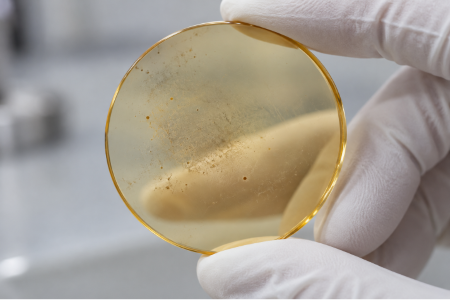
Contaminated laser protective window:


 IPv6 SUPORTADO POR REDE
Nosso horário
Seg, 21/11 - Quarta, 23/11: 9h - 20h
Qui, 24/11: fechado - Feliz Dia de Ação de Graças!
Sexta-feira, 25/11: 8h - 22h
Sábado, 26/11 - Dom, 27/11: 10h - 21h
(todos os horários são horário do leste)
 English
 français
 Deutsch
 italiano
 русский
 español
 português
 Türkçe
 ไทย
 Tiếng việt

